Jane and I recently started Zumba classes at the community centre. For those who don’t know, Zumba is a form of dance class that is a high-energy, full-body work out. There are also “Zumba Gold” classes, which are less intense and designed for seniors and beginners. I go to whichever one fits in my schedule and find that I sweat there more than I do with any other form of working out! As well as sweating profusely, I realize that I am challenging my brain to figure out how to follow the repetitive sequences of dance steps. I congratulate myself, each class, as I feel I am single-handedly keeping Alzheimer’s at bay with the concentration and focus I employ during the class.
Scientists have long touted the myriad of health benefits of many forms of dance. According to Dr. Google, the benefits of dance include:
Increased Flexibility & Balance: Regular, rhythmic movement helps improve agility, flexibility, and spatial awareness, reducing the risk of falls.
Cardiovascular & Aerobic Fitness: Dancing acts as a great cardio workout (I’ll say!), challenging your heart rate and improving lung function, comparable to traditional exercise like biking or swimming.
Muscular Strength & Endurance: It builds strength, particularly in the lower body, by requiring movement on various planes.
Weight Management: High-energy dance styles like Zumba or hip-hop can burn between 200 and 400 calories in an hour.
Bone Health: As a weight-bearing activity, dancing strengthens bones and helps reduce the risk of osteoporosis.
Mental & Cognitive Health: Dance increases cognitive function and memory, and it is known to lower stress, anxiety, and depression by releasing endorphins.
Social & Emotional Well-being: It boosts self-confidence, fosters social connection, and can improve self-esteem.
The beauty of dance is that it can be done without equipment and practiced anywhere. You can reap many of the benefits of dancing in your own home just by curating a good list of favourite tunes on Spotify and turning up the music! You can follow a YouTube video for a class in Zumba or Line Dance. You can go to a community centre or a studio and take a drop-in class, or sign up for a series and make it part of your schedule to build momentum. All these things are beneficial to your health.
New research demonstrates that dancing rewires how your brain processes emotion. A 2025 study measured emotional intelligence before and after a dance program. Those who participated in the dance program showed improvement in three areas: recognizing their own emotions, managing feelings under pressure and reading emotions in others accurately. Dance engages the brain through movement of the body, which reaches deeper systems that words cannot access. By moving in rhythm with music, you simultaneously activate regions of the brain responsible for emotion, coordination and timing. This combination creates stronger neural connections than just thinking alone.
If you are involved in a partner or group dance, you must anticipate what others will do. This trains your brain to read subtle cues, shifts in posture, timing and intention. These skills transfer directly to everyday social situations. Reading people involves the same neural systems- whether you are dancing or having a conversation. The study also found that dancers regulate stress more effectively. They managed emotionally tense situations with more control and recovered faster afterward than the control group.
Another benefit- rhythmic movement signals safety to the nervous system. Steady rhythm reduces activity in the amygdala, the part of your brain that triggers fear and anxiety. Threat perception decreases naturally with regular dancing.
Group dance causes the body to release the hormone oxytocin, linked to bonding and trust. Moving in sync with others creates connection without needing words, building social bonds through shared rhythm. Every culture through the ages has developed communal dances as part of weddings, rituals and celebrations. Synchronized movement builds group cohesion much faster and deeper than conversation ever could.
And as for my feeling that I’m fighting Alzheimer’s by stumbling along to follow my Zumba teacher… a 2024 study (Verghese et al.) showed that dance reduced the risk of dementia by a staggering 76%, outperforming other forms of exercise in improving global cognition and memory! A 2017 study found that elderly dancers significantly increased the volume of their hippocampus (the brain’s memory centre), reversing age-related volume loss with the cognitive demand of learning new choreography. I knew my hippocampus felt bigger.
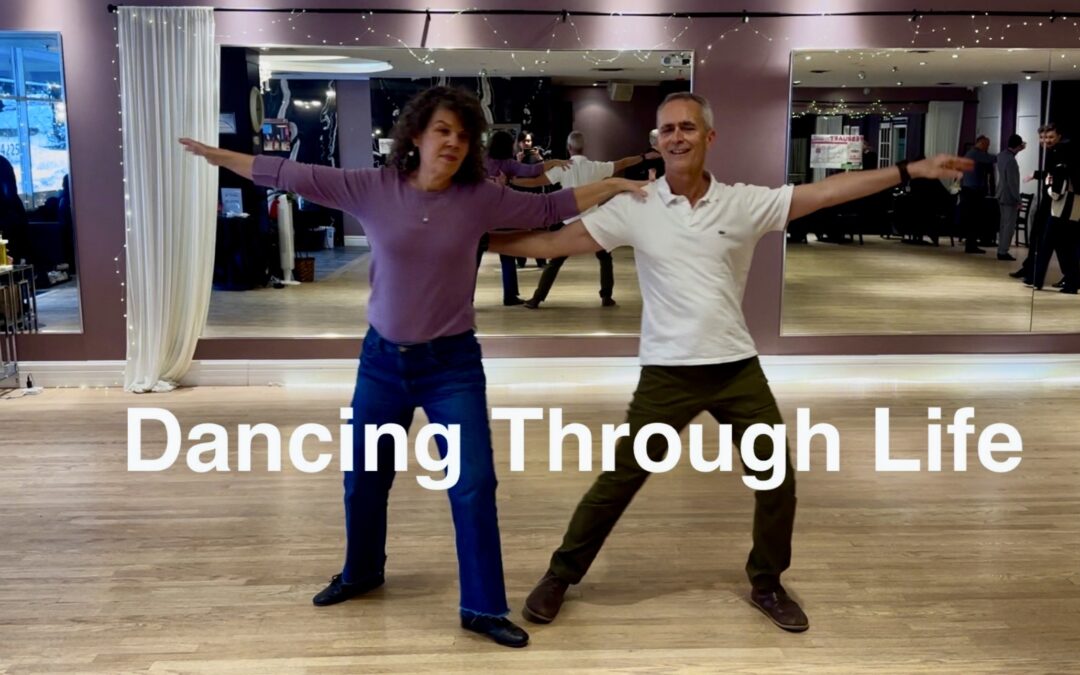
Jane and I have taken ballroom lessons together at Arthur Murray North York for years now. Bre and Tony, our teachers, are wonderful and the studio is another great place to dance. Taking classes with a partner has tremendous benefits for your relationship. If you click HERE, you can watch a YouTube video of our latest “performance”, Dancing Through Life. In light of all the health benefits- a very fitting theme song!
So what are you waiting for? Grab those dancing shoes and turn up the music! Your body will thank you!!!