

Back in January, I wrote about the importance of fascia. Fascia is the three-dimensional connective tissue matrix in your body, through which is suspended every vessel, nerve and organ you have, including your lymphatic network. (Click here to read the article.) Because “the internet” has been monitoring my research with Dr. Google, I have since been inundated with videos and social media posts about fascia and lymph flow.
What is lymph, and why is this important, you ask? Lymph is a clear, watery fluid that circulates throughout your body’s lymphatic system. This fluid leaks from blood plasma, and it bathes your body’s tissues – delivering nutrients and collecting cellular waste, bacteria, and viruses. It then passes through your lymph nodes to be filtered by white blood cells before returning to the bloodstream.
The lymphatic capillaries (highways for the lymph) sit within the superficial and deep fascial layers, relying on the tension of the fascia and the movement within it for the lymph to travel. There is no central pump for lymph in the way the heart pumps blood through arteries. Lymph flow relies on “micro-deformations” of the fascia that naturally occur with movement. The fascial matrix must be hydrated, elastic and mobile for the lymph system to work properly. Any loss of fascial adaptability, such as fibrosis and rigidity that occurs following an injury or sedentary period will reduce the mechanical pumping and slows lymph formation at the source.
With restricted flow, fluid accumulates, tissues swell, pH shifts, nociceptors sensitize and the inflammatory loop reinforces further stiffening. If the lymph don’t flow, you won’t go! (Do you like that? I just made it up). Since my algorithm has recognized my interest in fascia and lymph flow, I have seen many different people post videos with flow routines. Some of them give credit to “ancient Chinese secrets” because some of these movements are taken from Qi Gong. Some promote it as a weight loss strategy, as improper lymph flow and fluid retention can lead to challenges in metabolism and weight management issues.
Weight loss. I was not planning on highlighting this, as I believe this is a holistic wellness issue. However, Jane bought a fancy scale 45 days ago that includes an app that tracks your weight, percentage body fat and all kinds of metrics. I didn’t think much about it at the time. I found that though I didn’t change anything in my diet or exercise routine in the past 45 days, the scale showed me a nice graphic this morning with a steady decline in my weight of 4 pounds, and my percentage body fat has decreased by almost 4%. All that I’ve done differently in this period is this fascia lymph flow routine and increased my sauna usage over the past week (I will write about sauna benefits another time).
Many of the flow routines on the internet contain the same exercises. Some recommend a specific number of repetitions for each activity, but I like the idea of doing each for one minute. I find this easier to keep track of and it allows me to focus on the movement I am making. If you have a timer that beeps once a minute, that is great. It is just as easy to do the routine facing a clock with a second hand and switch exercises each time the second hand passes the same point.
Nose Breathing. An important aspect of releasing fascia and improving lymph flow is to be relaxed as the exercises are performed, allowing breath to flow freely. I have done a lot of breath work over the years, but until recently I was pretty comfortable breathing in my nose (unless it was really clogged with allergies) but was not good at breathing out my nose if I was exerting myself at all. I was the noisiest person in any yoga class as I puffed air out my mouth. In a workshop, I realized that my barrier to this was psychological and not physical. Recognizing that I COULD breathe out my nose if I relaxed and slowed down allowed my respiration to become smoother and less distracting so that I could focus on the movement of breath in my body. To work on “nose breathing”, try resting about 75% of your tongue against the roof of your mouth with the tip of your tongue touching the back of your front teeth. Have your teeth slightly parted and your lips closed. Allow the breath to flow all the way to the bottom of your lungs and pay attention to the sensations in your body.
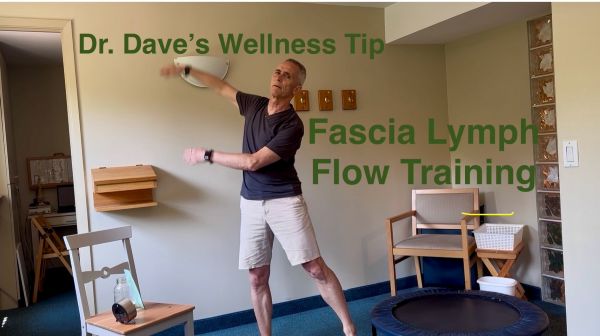
Click here to watch a YouTube video for tips on the 10 different exercises in the Fascia Lymph Flow Routine that I do.
The 10 exercises are:
1. Lymphatic Hops *
2. Hops with Lumbar Twist *
3. Trunk Twists
4. Body Waves
5. Arm Flow
6. Dead Arm Twists
7. March & Clap with Chest Opener
8. Bilateral Arm Swings **
9. Zen Swings
10. Spinal Cord Breathing ***
* I confess, when I started this I found the hops challenging on my calf muscles and I had to stop a couple of times to stretch. Hang in there!
** For #8, I forgot to mention in the video that as the arms go up I like to lean back into my heels, sticking my backside backwards and slightly arching my lumbar spine – even lifting the front of my feet off the ground. This stretches out the posterior chain.
*** We have an entire YouTube video teaching Spinal Cord Breathing. It is great for posture! Click here to watch it.
The exercises should be performed at a fairly quick pace to promote circulation. Barefoot is ideal, but running shoes, a yoga mat or rebounder can help you as you start out. As you are getting used to each motion, you may start slowly and build up the speed, maintaining slow deep nose breathing. If a movement stresses a joint that is injured, such as arm swings with the shoulder, you may slow down the movement and work within the comfortable range for that joint.
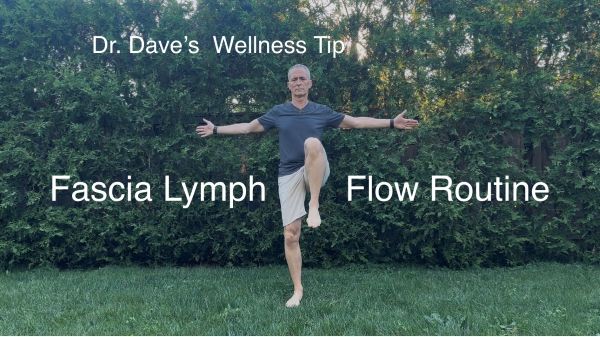
Try this series yourself! You can follow along and do the exercises with me by clicking here to see the YouTube video. (I’d encourage you to watch the “training” video first.)
It’s good for your health because, as they say, (and I’m sure this is trending by now)…
If the lymph don’t flow, you won’t go!