
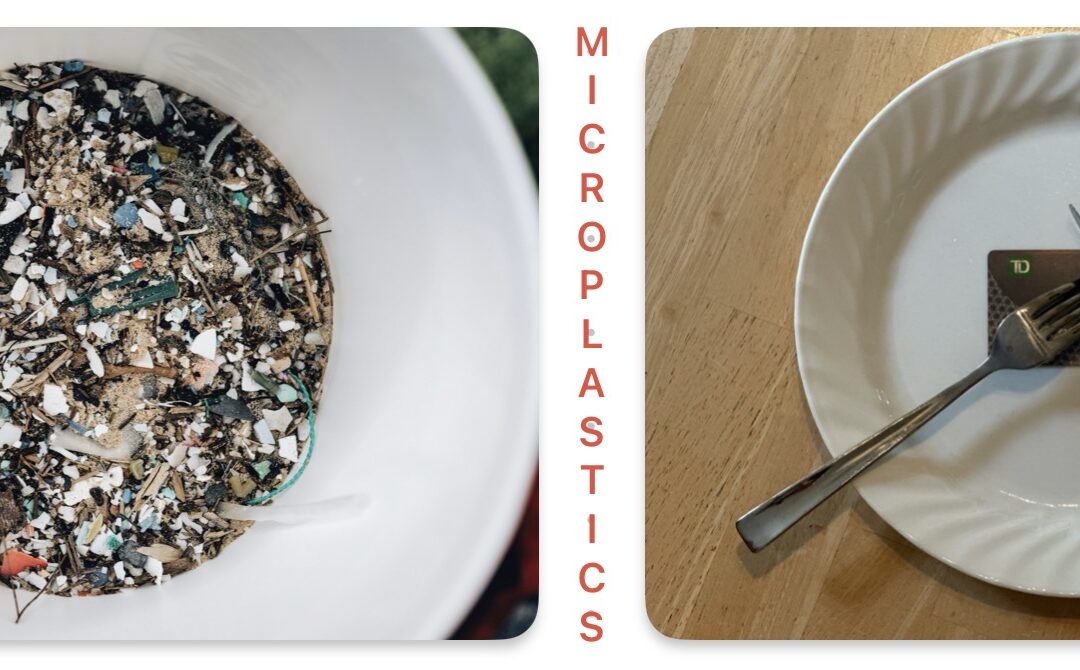
This “wellness article” is a little more discouraging than usual- but keep reading there is hope and practical suggestions at the end!
“Plastic never goes away — it just breaks down into finer and finer particles.“
This quote is from Desiree LaBeaud, MD, a physician specializing in pediatric infectious diseases at Stanford Medicine. These particles are referred to as “microplastics”. They may be absorbed into the human body through the skin, respiration and particularly by ingesting them with food or liquid. They may be found in many household items including bottled water, seafood, tea bags and meat. They can be hidden in the linings of tins for soup, vegetables and beverages. They are formed from dyes and clothing fibers shed from synthetic fabrics during washing cycles, tire wear particles from vehicles and city dust, and fragmentation of single-use packaging, bottles, and bags over time. Scientists have estimated that adults ingest the equivalent of one credit card per week in microplastics. (Hence our picture above!)
Should we be alarmed? Yes! These particles are now commonly found throughout the human body, including the lungs, bloodstream, and organs. Researchers are trying to catch up- studying the many health implications. Microplastics often contain harmful chemical additives and heavy metals. They have been found in the dissection of multiple human organs and tissues, including the brain, testicles, heart, stomach, lymph nodes and placenta. They’ve also been detected in urine, breastmilk, semen and meconium (a newborn’s first stool). Studies in animal and human cells suggest microplastics exposure could be linked to cancer, heart attacks, reproductive problems and a host of other harms.
As I said at the beginning, this is extremely discouraging information and everyone is affected by it! The good news is that we CAN minimize our exposure to microplastics. First, understand that heat increases the breakdown of plastic, so if plastic items must be used, then the best practices include hand-washing them instead of using a dishwasher and never placing them in a microwave. Don’t use electric kettles or coffee makers in which the reservoir that holds the boiling water is made of plastic . Microplastics are also released during freezing and thawing as well as during normal kitchen routine activities, so plastic containers and baggies are best replaced with glass containers or food-grade silicone bags.
Other tips include:
- Avoid prepackaged foods and beverages, particularly microwavable plastic containers and single-use plastic water bottles
- Use bamboo or stainless-steel cutting boards and not plastic ones.
- Filter your own drinking water using reverse osmosis or carbon block filters. (use “Brita elite”- apparently a standard Brita does not filter microplastics). Drink and transport your water in glass (such as a mason jar) or metal containers.
- Launder new clothes before wearing them.
- Wear clothes made with fabrics that have natural fibers- cotton, hemp, wool and silk. Avoid synthetic fibers such as polyester, nylon, acrylic, spandex and olefin.
- Avoid liquid laundry detergent and pods as well as dryer sheets which contain plastics and chemicals with the added fragrances.
- Replace plastic toothbrushes and dental floss with bamboo brushes and silk floss.
- Avoid non-stick cookware, try switching to cast iron or stainless steel. Replace plastic cooking utensils with wood or metal.
- Avoid synthetic scents, fragrances and perfumes.
- Avoid handling credit card receipts as some still contain Bisphenol A or S. (In our office we use thermal paper that does not, but if you’re not sure- don’t handle the receipt!)
We can reduce our exposure!
We will all experience some exposure no matter how careful we are, but the good news is that many of the microplastics that we absorb can be flushed out! Vitamins C and E are antioxidants that help counter the negative effects of microplastics. Drinking filtered water helps your body flush out microplastics. Eating a high-fiber diet helps your body get rid of plastic in your waste by promoting bowel movements.
My daughter recommended a Netflix documentary to me called “The Plastic Detox”. To be honest, initially I avoided watching it because I wanted to continue to stick my head in the sand. I finally watched it and I found that I could make the small changes suggested – replacing my reusable plastic drinking bottle with a mason jar, changing our plastic cutting board to bamboo and switching my synthetic watch band for a leather one. We changed to a powdered laundry soap and dishwashing detergent and I just purchased a bamboo toothbrush!
The Netflix documentary is challenging to watch as it follows 6 couples that have been experiencing problems in fertility and it goes into much greater detail than I do about the negative impact that microplastics have on our health. It is encouraging to see that when the couples followed a program of intentionally reducing their exposure to microplastics, they all saw changes in their fertility levels and (spoiler alert) 3 couples went on to have a child (so far– the documentary just came out this year). The other encouraging thing is that these lifestyle changes led to 1/3 of them seeing a lower BMI, 60% of them reporting increased energy and 80% of them reporting better sleep quality.
While we can try to limit our exposure, we cannot be entirely free of microplastics in the world in which we currently reside. There are those who are seeking to develop alternatives to plastic (or how it is made) but that is going to take some time. However, the documentary reminds us that at one time gasoline contained lead and it was estimated that half the population (of the United States) had lowered their IQ due to the resulting brain damage from toxic lead levels in the blood. Individuals born in the 1960s and 1970s suffered the heaviest cognitive toll, with an estimated loss of up to 5 to 7 IQ points. Lead was banned from gasoline in 1990 in Canada (and 1996 in the USA). As leaded fuel was phased out and blood-lead levels plummeted, cognitive scores across generations improved. Experts now estimate that the drop in blood-lead levels correlates with a 4 to 6 point increase in IQ! We can come back from this!
In the meantime, let us each do our part to minimize our own personal exposure to microplastics as best we can.